Table of Contents
- Why Indian Students Choose MBBS Abroad in 2026
- MBBS Abroad 2026 — Key Highlights
- Top Countries for MBBS Abroad — Comparison
- Why Russia Remains a Popular Choice
- Eligibility Criteria (NMC Guidelines 2026)
- Fees & Cost Breakdown
- Russian Universities Indian Students Choose Most
- Step-by-Step Admission Process
- Documents Required
- FMGE / NExT — Your Pathway to Practice in India
- Frequently Asked Questions
Every year the number of NEET candidates runs many times ahead of the MBBS seats available across all government and private colleges in India. NTA publishes the registration figure each cycle and NMC publishes a dated seat matrix; read those two rather than a number quoted in a blog. Private medical colleges charge ₹60 lakh to ₹1.5 crore for the full course (indicative — the binding figure is the fee notified by each state Fee Regulatory Committee). For middle-class families, this bottleneck has turned MBBS abroad from a "backup plan" into a serious first option for 2027.
Countries like Russia, Kazakhstan, Georgia, Kyrgyzstan, and the Philippines now offer English-medium teaching at WDOMS-listed universities, with a six-year all-in cost that starts well below a single year at many Indian private colleges. A degree is not "WHO recognised" — WHO accredits no medical school anywhere; what it can be is compliant with the FMGL-2021 criteria, which is assessed per degree rather than per university. This guide covers everything you need to make the right decision for your 2027 intake.
Why Indian Students Choose MBBS Abroad in 2026
The numbers tell the story clearly. India's MBBS capacity is published by NMC in a dated seat matrix on nmc.org.in, and both the college count and the seat count change every admission cycle — read the current one rather than a figure quoted in a blog. What does not change is the shape of the problem: the number of NEET candidates runs to well over a million against a fraction of that in seats. Even students with scores of 500–600 often miss government college cutoffs — and private college fees of ₹60 lakh to ₹1.5 crore for the full course (indicative — the binding figure is the fee notified by each state Fee Regulatory Committee) are simply out of reach for most families.
MBBS abroad solves this problem. Students who qualify NEET can secure admission to foreign universities whose degrees meet NMC's FMGL-2021 conditions at a total six-year cost well below a private Indian medical college, often by more than half.
- ›Seat shortage: NEET candidates outnumber MBBS seats many times over, and the gap has not narrowed. Check NMC's current seat matrix and the year's NTA registration figure for the exact numbers.
- ›Cost crisis: a private Indian MBBS costs ₹60 lakh to ₹1.5 crore for the full course, against roughly ₹21–53 lakh all-in for the standard tier in Russia.
- ›Internationally listed: a WDOMS listing is where the US and UK routes start, though it is not enough on its own; the section on Russia below explains the further checks.
- ›No donation, no capitation: Admission is purely merit-based in foreign universities.
- ›Return pathway exists: pass FMGE, then complete a 12-month supervised internship in India before your State Medical Council registers you to practise.
MBBS Abroad 2026 — Key Highlights
| Course Duration | 6 years in Russia; varies by country. Ask the university to certify the study and internship split in writing |
| Total Cost (6 Years) | ₹21 – ₹53 Lakhs (tuition + hostel + living) |
| Medium of Instruction | English for foreign students at many universities; in Russia some parts can stay in Russian, so get the medium for every year in writing |
| NEET Requirement | Mandatory (since May 2018) |
| Recognition | WDOMS listing is the checkable one; NMC approves no foreign university and WHO accredits none |
| Living Cost | ₹11,500 – ₹17,200 / month |
| Minimum PCB Marks | 50% (40% for SC/ST/OBC; 45% for UR-PwD) |
| Minimum Age | 17 years as of 31st December of admission year |
| Licensing Exam (India) | FMGE (NExT, its planned replacement, deferred since July 2023) |
| 2027 Intake Begins | September – October 2027 |
Top Countries for MBBS Abroad — 2026 Comparison
Choosing the right country is the single most important decision in your MBBS abroad journey. Each country offers a different combination of cost, FMGE pass rates, clinical exposure, and lifestyle. Here's an honest breakdown of the top 6 destinations for 2026:
| Country | Total 6-Year Cost | FMGE 2024 (passed of appeared) | Best For |
|---|---|---|---|
| 🇷🇺 Russia | ₹21 – ₹53 Lakhs | 3,331 of 11,276 (29.54%) | Balance of cost and clinical exposure |
| 🇬🇪 Georgia | ₹25 – ₹40 Lakhs | 1,505 of 4,221 (35.66%) | Strongest record of the large destinations |
| 🇰🇿 Kazakhstan | ₹18 – ₹25 Lakhs | 1,261 of 5,018 (25.13%) | Budget-friendly, close to the national average |
| 🇰🇬 Kyrgyzstan | ₹15 – ₹22 Lakhs | 3,792 of 15,135 (25.05%) | Lowest total cost; the largest cohort of any country |
| 🇵🇭 Philippines | ₹20 – ₹35 Lakhs | 2,003 of 9,967 (20.10%) | US-style curriculum, English throughout |
| 🇺🇿 Uzbekistan | ₹18 – ₹28 Lakhs | 197 of 490 (40.20%) | Highest 2024 rate of the countries we track, but on a small and volatile cohort |
Important: NMC publishes no “approved list” of foreign universities; the list people remember was MCI’s, and it ended when MCI was wound up in 2020 (why there is no NMC approved list). It is entirely your responsibility to check, before applying, that the degree you will receive meets the NMC FMGL Regulations 2021; the conditions are listed under Eligibility below.
Why Russia Remains a Popular Choice for MBBS Abroad
Russia has drawn Indian medical students for over three decades. With a large and long-established Indian student population — 11,276 Russia-trained candidates sat the FMGE in 2024 alone, one published measure of its size — Russia offers a combination of affordability, quality, and student support.
- ›Lower fees: Annual tuition ranges from about ₹2.2–7 lakhs against ₹60 lakh to ₹1.5 crore for the whole course at a private Indian college. Zero capitation fee, zero donation.
- ›WDOMS-listed universities: a World Directory listing is where the USMLE and PLAB routes start, not the whole test. ECFMG also needs a Sponsor Note on the school’s listing that covers your graduation year, and the GMC has to accept your degree before you sit PLAB (see our guide to careers after MBBS in Russia). Note that no foreign university is “NMC approved” — NMC endorses no list — and WHO does not accredit medical schools at all.
- ›English-medium tracks: several state medical universities teach General Medicine to foreign students in English, though Russian can stay in parts of the course. At Volgograd, for one, the State Final Attestation is held in Russian. Get the medium for every year in writing; our English-medium guide lists what to ask.
- ›Clinical exposure: Universities are affiliated with large multi-speciality hospitals. Hands-on clinical training begins from Year 3 onwards.
- ›Large Indian student community: student associations and an established peer network at many universities. Do not count on Indian food on campus, though: an undated Indian Embassy page says Indian food is not available in the universities and students generally cook their own, so ask your university about food, in writing (our safety guide for Russia covers hostels and food).
- ›Modern infrastructure: Advanced laboratories, simulation centres, and research facilities.
- ›Hassle-free transparent admission: Minimal documentation, no national entrance exam beyond NEET (some universities set their own: Volgograd has a language test in Russian or English), and a straightforward visa process with university support.
- ›FMGE preparation support: Many Russian universities run structured coaching programs to help Indian students clear the licensing exam back home.
Eligibility Criteria for MBBS Abroad — NMC Guidelines 2026
The eligibility criteria for MBBS abroad are governed by the National Medical Commission (NMC). Meeting these requirements is mandatory for your degree to be valid in India after graduation.
- ›Minimum 50% aggregate in PCB (Physics, Chemistry, Biology) in Class 12 from a recognised board — 40% for SC/ST/OBC candidates, and 45% for general-category candidates with a benchmark disability.
- ›NEET UG qualification is mandatory — valid NEET scorecard required. NEET has been required for admission abroad since May 2018, and a NEET result is valid for 3 years from the date it is declared.
- ›Minimum age: 17 years on or before 31st December of the year of admission.
- ›No upper age limit. The 25-year cap (30 for reserved categories) was set aside by the Supreme Court and NEET UG has had no maximum age since, so nobody is too old to apply.
- ›Valid Indian passport. For a Russian study visa it must be valid for at least 1.5 years from the date the visa starts; other countries set their own rule.
- ›Your degree must meet the NMC FMGL Regulations 2021: at least 54 months of study, a 12-month internship at the same foreign institution, English as the medium of instruction, and a licence to practise in the country that awards it.
MBBS Abroad Fees & Cost Breakdown 2026
One of the biggest advantages of MBBS abroad is cost. Here's a transparent, realistic breakdown of what you'll spend across the most popular destinations — including the expenses most consultants forget to mention:
| Expense | Russia | Kazakhstan | Kyrgyzstan |
|---|---|---|---|
| Annual Tuition Fee | ₹2.2 – ₹7 Lakhs / yr | ₹2.5 – ₹4.5 Lakhs / yr | ₹2 – ₹4 Lakhs / yr |
| Hostel / Accommodation | ₹30K – ₹80K / yr | ₹25K – ₹60K / yr | ₹20K – ₹50K / yr |
| Monthly Living Expenses | ₹10K – ₹20K / mo | ₹8K – ₹15K / mo | ₹7K – ₹12K / mo |
| Total 6-Year Cost | ₹21 – ₹53 Lakhs | ₹18 – ₹25 Lakhs | ₹15 – ₹22 Lakhs |
Budget tip: Plan for ₹20,000–₹30,000/month in personal expenses on top of fixed annual fees (tuition + hostel + food). Students who budget carefully often spend less — but it is always smarter to plan for the higher end and be pleasantly surprised than to run short mid-semester.
Russian Medical Universities Indian Students Choose Most, 2026
Russia has dozens of medical universities taking Indian students. Compliance is decided per degree against the FMGL-2021 criteria, not per university by any authority, so treat the list below as where students commonly go, not as a clearance. Below are the most popular and well-established choices for Indian students, known for strong academics, active Indian communities, and FMGE support:
- ›Kazan State Medical University — One of Russia's oldest and most respected medical institutions
- ›Perm State Medical University — Known for excellent clinical training and large Indian student intake
- ›Volgograd State Medical University — affordable, with an established Indian community; its FMGE record is below the national average at 113 of 586 in 2024
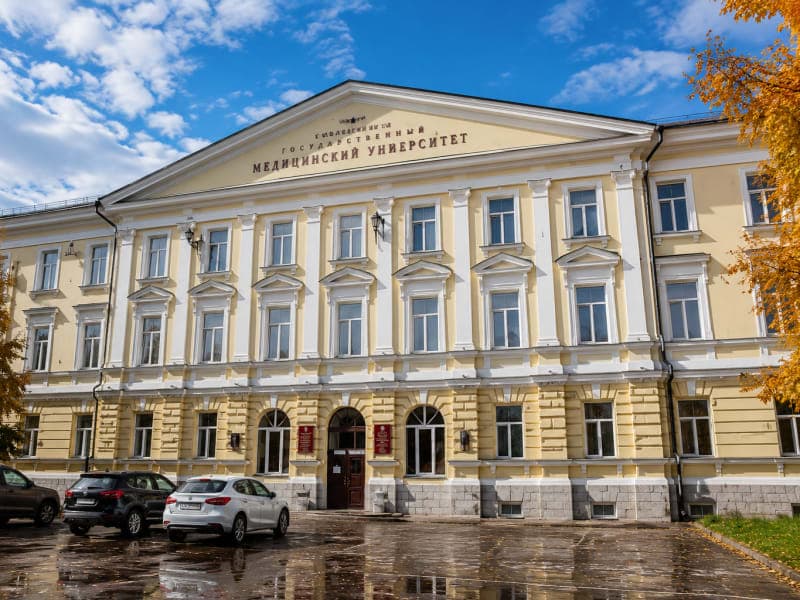
- ›Stavropol State Medical University — Southern Russia, warm climate, highly preferred by Indian students
- ›I.M. Sechenov First Moscow State Medical University — the most expensive on this list, and its Indian cohort is small, 12 of 54 passing FMGE in 2024
- ›RUDN University (People's Friendship University) — Highly diverse, 150+ nationalities, based in Moscow
- ›Orenburg State Medical University — the strongest FMGE record of the Russian universities we track: 194 of 447 passed in 2024
- ›Mari State University — Growing Indian community, affordable total cost
Step-by-Step Admission Process for MBBS Abroad 2027
The admission process for MBBS abroad is straightforward — but timing matters. The best universities fill their international seats quickly. Here is the complete step-by-step process for the 2027 intake:
- ›Step 1 — Choose your country and course — evaluate on FMGE pass rate, total cost, clinical exposure, Indian community size, and whether the course itself meets the FMGL-2021 criteria: 54 months of study, a 12-month internship at the same institution, English medium, and a qualification that licenses you to practise locally.
- ›Step 2 — Fill the application form — Submit your NEET scorecard, Class 10 and 12 marksheets, passport copy, and personal details to the university.
- ›Step 3 — Receive your official admission / invitation letter — The university sends your admission letter. For Russia, the visa invitation is then issued by the regional office of the Ministry of Internal Affairs (MVD) at the university's request, and your study visa is issued on the basis of it.
- ›Step 4 — Apply for your student visa — Submit the documents on that country's official visa list to its embassy, consulate or visa centre in India. For Russia that list is your passport, the application form, two photographs, the fee, the original MVD invitation and an HIV certificate in English; it has no general medical certificate. Our Russian student visa guide gives the Embassy’s processing tiers and fees.
- ›Step 5 — Pay your first-year tuition fee — Confirm your seat by paying the first-year fees as instructed by the university to secure your admission.
- ›Step 6 — Complete pre-departure formalities — Arrange forex, travel insurance, winter clothing (for Russia/Kazakhstan), medical checkup, and emergency contact documentation.
- ›Step 7 — Fly to your MBBS destination — Your consultant will coordinate airport pickup, hostel check-in, and university registration upon arrival.
Documents Required for MBBS Abroad Admission
- ›Scanned copies of Class 10th and 12th marksheets and pass certificates
- ›Valid NEET UG Scorecard (within 3-year validity period)
- ›Valid Indian passport (for a Russian study visa, valid at least 1.5 years from the visa’s start date)
- ›Birth certificate (original + notarised/attested copy)
- ›Admission letter from the university and, for Russia, the original study-visa invitation issued by the MVD
- ›HIV certificate in English (for a Russian visa, take the test within 3 months of applying), plus a medical fitness certificate if your university asks for one
- ›6 colour passport-size photographs (white background, recent)
- ›Student visa (issued by the respective country's embassy in India)
- ›Caste certificate (optional — required only for reserved category applicants)
- ›Air tickets and travel insurance documentation
FMGE / NExT — Your Pathway to Practice in India
After completing your MBBS abroad, you must clear the FMGE (Foreign Medical Graduate Examination) and then complete a 12-month supervised internship in India before a State Medical Council can register you to practise. This is not optional and cannot be bypassed. NExT (National Exit Test), planned as FMGE’s replacement, is deferred, as explained below. Choose a university that offers structured FMGE coaching support from Year 1.
| Country | FMGE 2024 (passed of appeared) | Coaching Support |
|---|---|---|
| Georgia | 1,505 of 4,221 (35.66%) | Moderate |
| Russia | 3,331 of 11,276 (29.54%) | Strong — most universities run coaching |
| Philippines | 2,003 of 9,967 (20.10%) | Strong — US-style curriculum helps |
| Kyrgyzstan | 3,792 of 15,135 (25.05%) | Moderate |
| Kazakhstan | 1,261 of 5,018 (25.13%) | Limited — plan on self-study |
- ›Start preparing from Year 1 — not after you return. Students who integrate FMGE prep into their regular studies consistently outperform those who start late.
- ›NExT has not replaced FMGE yet — NMC public notice No.Cdn.19012/15/2022/Coord-NMC of 13 July 2023 deferred the National Exit Test on the Health Ministry’s advice, until further directions, and that deferral has not been lifted. FMGE still runs, and on 28 August 2026 NBEMS decided to hold it three times a year instead of twice (our FMGE exam guide tracks the sessions). Plan for FMGE and treat any specific NExT start year you see quoted as a prediction.
- ›Ask your consultancy about university coaching support — This should be a key factor in your university selection decision, not an afterthought.
Final Verdict — Is MBBS Abroad the Right Choice for You in 2026?
MBBS abroad in 2026 is one of the most strategically sound options for Indian medical aspirants. The gap between available NEET seats and qualified candidates is still wide, and private college fees in India are beyond the reach of most families.
Countries like Russia, Georgia, Kazakhstan and the Philippines offer English-medium teaching at WDOMS-listed universities at a fraction of the cost, with a route back through FMGE and a 12-month internship in India. Note the wording: no university is "WHO recognised" or "NMC approved" — compliance is judged per degree against the FMGL-2021 criteria.
The key is making an informed decision early — choosing the right country, verifying NMC compliance yourself, planning for FMGE prep from Year 1, and working with a counsellor who gives you full transparency on costs. Seats for the 2027 intake will fill fast. Start today.
Share this article