The short answer
In the NBEMS 2024 institute-wise report, 194 of 447 Orenburg-trained candidates passed FMGE: 43.40%, against a national average of 25.80%. That was the best 2024 record among the Russian universities we track with 100 or more candidates. Lifetime, across every report from 2019 to December 2025, it is 695 of 1,839, or 37.79%.
If you have seen a different number elsewhere, you probably have. The first page of Google quotes three different rates for this one university. This page shows every year with its denominator, straight from the source PDFs, which are linked at the bottom so you can check us.
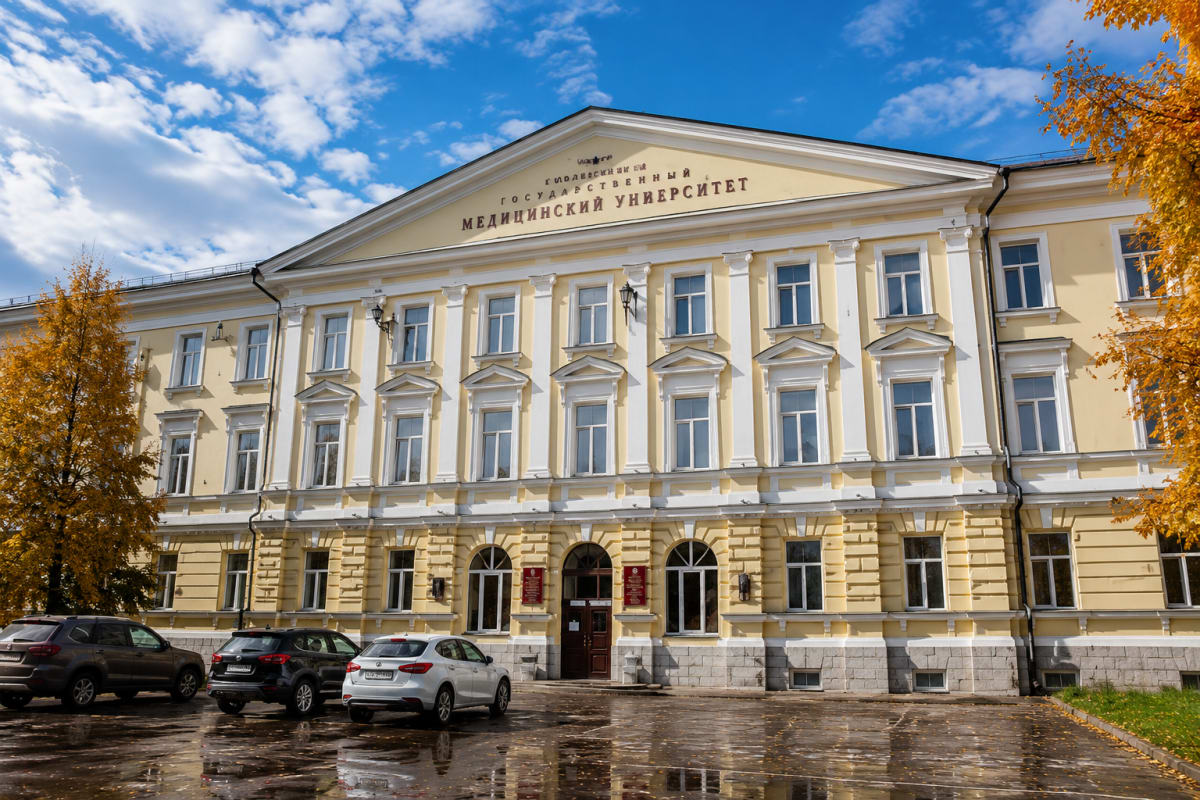
Orenburg State Medical University is a government medical university from 1944, listed in the World Directory of Medical Schools as F0001553. For an Indian student, though, one question sits above everything else: do its graduates actually clear FMGE? The National Board of Examinations in Medical Sciences answers that twice a year, institution by institution, in public PDFs. Almost nobody quotes them properly. We did the reading.
The record, year by year
Every row below reads passed of appeared, exactly as printed in the NBEMS institute-wise performance reports. We checked each row arithmetically: passed divided by appeared has to reproduce the percentage NBEMS printed, or we drop the row.
| Report year | Appeared | Passed | Pass rate |
|---|---|---|---|
| 2019 | 61 | 24 | 39.34% |
| 2020 | 148 | 36 | 24.32% |
| 2021 | 170 | 71 | 41.76% |
| 2022 | 257 | 101 | 39.30% |
| 2023 | 289 | 89 | 30.80% |
| 2024 | 447 | 194 | 43.40% |
| June 2025 | 158 | 40 | 25.32% |
| December 2025 | 309 | 140 | 45.31% |
| Lifetime | 1,839 | 695 | 37.79% |
Note: pass rates move every session and describe past cohorts, so this table will read differently a year from now. NBEMS publishes each 2025 session separately, so both appear above as their own rows. For context, the national average across all countries was 23.35% (12,148 of 52,030) in 2022, 16.65% (10,261 of 61,616) in 2023 and 25.80% (20,382 of 79,000) in 2024.
Three things stand out. The cohort grew from 61 candidates to 447 in five years, so the recent rates rest on real numbers rather than luck. The rate swings hard between sessions: 25.32% in June 2025, then 45.31% in December, higher than any full year in its record. And the 2024 rate of 43.40% sits well above the 29.54% (3,331 of 11,276) that Russia as a whole managed that year; the lifetime 37.79% beats Russia's country average in all three years for which we hold validated country totals, 26.03% (1,555 of 5,973) in 2022, 19.43% (1,642 of 8,450) in 2023 and 29.54% in 2024. Anyone selling you a single tidy percentage is hiding at least two of these three facts.
Why every website shows a different number
When we searched this exact question in August 2026, the first page of results quoted 43.40%, 35.6% and 30.8% as Orenburg's pass rate. One consultancy's comparison table skips numbers entirely and just grades the university's FMGE record as "High".
The trick is rarely an invented number. It is a real number stripped of its year. 43.40% is the 2024 report. 30.8% is 2023. Blend a few years without saying so and you can land almost anywhere in between. Quote 2024 alone and Orenburg looks unbeatable; quote June 2025 alone and it looks ordinary. Both are true, which is exactly why a single percentage with no year and no passed-of-appeared count tells you nothing.
The fix costs nothing: the NBEMS PDFs are public and free. Any site quoting a rate without a denominator has either not read them or hopes you will not. Our compiled extract, covering the 45 universities Indian students most often ask about across every report year, sits on the FMGE pass rates hub with a CSV you can download.
How Orenburg compares with other Russian universities
Same report, same year, same rules: the top five 2024 records among the Russian universities we track that sent 100 or more candidates (ten qualify; the other five, from Tver's 24.38% down to Stavropol's 18.36%, all sit below these). Cohorts under 100 are excluded here because small groups swing too hard to rank; Georgian American University, for example, passed 49 of 61 (80.33%) in 2024, a spectacular rate on a cohort a seventh of Orenburg's size.
| University | FMGE 2024 | Pass rate |
|---|---|---|
| Orenburg State Medical University | 194 of 447 | 43.40% |
| Mari State University | 292 of 930 | 31.40% |
| Perm State Medical University | 295 of 944 | 31.25% |
| Bashkir State Medical University | 105 of 340 | 30.88% |
| Kazan State Medical University | 134 of 436 | 30.73% |
| Russia, all institutions | 3,331 of 11,276 | 29.54% |
Orenburg led this group by 12 percentage points in 2024. That is a real gap, and it held on a cohort of 447 people. The honest caveat is that one year is one year; the same table built on 2023 would show 30.80%, still above that year's Russian average of 19.43%, but no longer dramatic. The ranked list across all countries, split by cohort size, is on our best FMGE pass rate universities page.
What this number can and cannot tell you
A 2024 pass rate describes people who enrolled around 2018. Teaching, intake quality and the medium of instruction can all have changed since. The figure also counts every attempt, repeaters included, so it is not the first-attempt rate, and NBEMS does not publish one.
And a pass rate says nothing about recognition. There is no such thing as an "NMC approved" university; NMC's own study-abroad page says it endorses no list of foreign institutions. What your degree must do is meet the FMGL-2021 criteria: at least 54 months of study, a 12-month internship at the same institution, "medium of instructions in English", and a licence to practise in Russia. Orenburg's own language regulation lets its academic council run a programme partly or fully in a foreign language, so get the medium for every year in writing. We wrote up the NMC rules, with every NMC notice that names a foreign university, in the NMC approval explainer.
The fee, from the university's own order
Orenburg publishes its tuition by signed order on its official disclosure page, and the latest one, order No. 616 dated 09.04.2026, prices the English-medium General Medicine track for the 2026-27 intake year by year: 422,380 roubles in year 1, falling every year to 233,020 in year 6. Most agent sites quote a flat dollar figure with no source; the real structure declines as you go. Fee orders and exchange rates both move, so treat any converted figure as an estimate and ask us for a current quote before you budget. The live year-wise conversion is on our Orenburg university page.
Check everything yourself
Nothing on this page needs to be taken on trust:
- ›The NBEMS institute-wise FMGE reports, free, 2012 onwards. Search "Orenburg" in any year's PDF.
- ›The WDOMS entry F0001553, which confirms the school's listing and history back to 1944.
- ›The fee orders on orgma.ru, in Russian; any translation tool handles the table.
- ›Our compiled dataset with every university and year on the FMGE hub, downloadable as CSV.
Sources and dates
FMGE figures are from the NBEMS institute-wise performance reports for 2019 through December 2025, each row arithmetic-checked against the printed percentage. Tuition is from OrSMU order No. 616 of 09.04.2026. WDOMS listing verified 21 August 2026. Pass rates change every session and fees change every year; check the linked sources before acting on anything here.
Share this article