


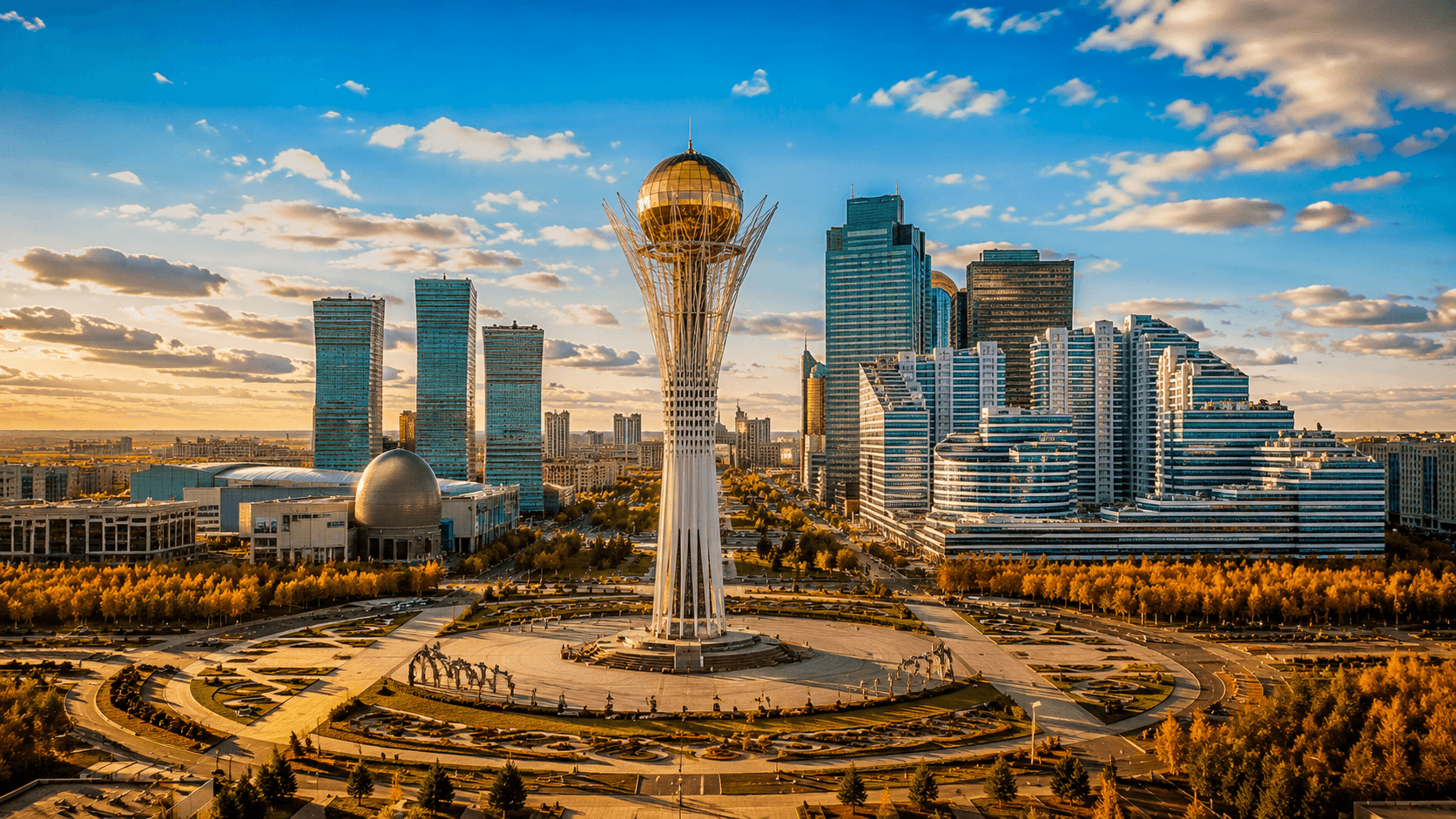
MBBS in Kazakhstan 2027–28
WDOMS-listed · English-medium tracks · Universities publish their own rates · FMGE route to India
MBBS in Kazakhstan 2027–28 - Top Universities, Fees, Eligibility & Admission Guide for Indian Students
The Embassy of India’s list (11 December 2025) names 13 accredited institutions licensed for Continuous Integrated Medical Education in Kazakhstan; we track five of them, all WDOMS-listed. Kazakhstan has an Indian community of about 11,000, about 10,000 of them students, by the Ministry of External Affairs’ India–Kazakhstan brief (July 2026). Tuition is published per year by the universities themselves and none of them publishes a course total, 16 direct flights a day link Delhi and Almaty, and the country ranks 44th of 163 on the Global Peace Index 2026. One change to know before anything else: on 1 October 2026 the Embassy of India in Astana advised that Kazakhstan’s standard medical course is now seven years, with a six-year accelerated track for international students that it cannot yet confirm leads to a licence to practise.
This guide covers what Indian students and parents need to know for 2027: the five WDOMS-listed universities we track, what each one publishes on fees, FMGE pass rates by university, the national English-certificate rule, climate, eligibility, visa, student life, and the pros and cons - verified and updated by A.J Trust Educational Consultancy.
MBBS in Kazakhstan is a medical degree at WDOMS-listed universities that has run six years (5 academic + 1 internship); under a new Kazakh policy the standard course is seven years, with a six-year accelerated track for international students (Embassy of India advisory, 1 October 2026). Indian students need a valid NEET qualifying scorecard, 50% PCB in Class 12, and, for English-medium entry, one of the certificates Kazakhstan’s national rules name (IELTS Academic 5.0, TOEFL iBT 35 or Duolingo 80) - though several universities run their own English test or interview instead. Teaching language varies by university: Astana, South Kazakhstan and Semey publish English-medium intakes for foreign students, Karaganda admits them by tests and an interview held in English, and KazNMU publishes no English-medium intake for foreign citizens. USMLE and Canada eligibility is a sponsor note on each school’s WDOMS record, not a country-wide recognition. After graduation, students must pass the FMGE - the route until NExT comes into force, under NMC’s draft amendment of 11 August 2026, with no NExT date notified - and then complete a 12-month supervised internship in India.
Course Name
MBBS (MD Physician)
Duration
7 years standard; 6 on an accelerated track (Embassy of India, 1 Oct 2026)
Tuition
Published per year by each university
Published Tuition
Astana 3,000,000 KZT/yr (2026-27) · SKMA 1,708,000 KZT/yr (2025-26) · Karaganda USD 4,675, year one (2026-27) · Semey USD 4,100/yr (estimate)
Min. Eligibility
50% PCB; 40% reserved
Living Expenses
Not published by the universities - ask us for a current estimate
NEET Required
Yes - mandatory
English Certificate
National rule: IELTS 5.0 / TOEFL iBT 35 / Duolingo 80 - or the university's own test
Teaching Medium
English-medium intakes at Astana, SKMA and Semey; KazNMU publishes none for foreign citizens
Intake
September every year
Listing
WDOMS-listed; FAIMER School IDs on our university pages
Indian Students
About 10,000 (MEA, July 2026)
Important - the English requirement, accurately: Kazakhstan’s Model Admission Rules (MES order No. 600, paragraph 7, as restated in July 2025) admit foreign students to English-medium Healthcare programmes by interview, provided they hold one of five certificates: IELTS Academic 5.0, TOEFL iBT 35, TOEFL ITP 417, TOEIC 550 or Duolingo 80. That is a real national rule and no other destination on our roster has one. Two things people get wrong about it: the IELTS floor is 5.0, not 5.5-6.5, and IELTS is not required specifically - Duolingo 80 satisfies it identically. Several universities publish their own entrance test or English interview instead, so check the route your university is running before you book anything.
Quick Facts About Kazakhstan
Planning MBBS in Kazakhstan? Here are the key facts every Indian student and parent should know before applying.
| Capital | Astana (Nur-Sultan) - long, severe winters |
| Largest City | Almaty - the financial centre; of the five universities we track, KazNMU is the one based here |
| Official Languages | Kazakh (official) & Russian (widely used) |
| English in Universities | English-medium intakes at Astana, South Kazakhstan and Semey; Karaganda tests and interviews in English; KazNMU publishes no English-medium intake for foreign citizens |
| Currency | Kazakhstani Tenge (KZT) |
| Population | 20,618,796 (Bureau of National Statistics, 1 September 2026) |
| Time Difference from India (IST) | 30 minutes behind IST - one national time zone, UTC+5, since 1 March 2024 |
| Climate | Long, severe winters (Nov–Mar), harsh in Astana and Karaganda and milder in Almaty and Shymkent; hot, dry summers |
| Global Peace Index Rank | 44th of 163 (GPI 2026); Russia 163rd, Georgia 94th |
| Medical Universities | 13 accredited institutions licensed for Continuous Integrated Medical Education (Embassy of India list, 11 December 2025), all five we track among them. NMC keeps no approved list |
| Course Duration | 7 years standard; 6 on an accelerated track for international students (Embassy of India, 1 October 2026) |
| FMGE Pass Rate (2024, NBEMS) | Kazakhstan 1,261 of 5,018 candidates (25.13%) | best of the five we track: Astana 149 of 416 (35.82%) |
| Indian Students in Kazakhstan | About 10,000, in an Indian community of about 11,000 (MEA India–Kazakhstan brief, July 2026) |
| MBBS Primary Intake | September every year |
| Direct Flights from India | Delhi → Almaty: 16 direct flights a day (MEA India–Kazakhstan brief, July 2026) |
| Source | Wikipedia - KazakhstanWikipedia - Time in KazakhstanBureau of National StatisticsGlobal Peace Index 2026MEA India–Kazakhstan briefEmbassy of India advisory, 1 Oct 2026Embassy of India list of licensed institutions, 11 Dec 2025NBEMS FMGE reportsNMC IndiaEmbassy of India, Astana |
Why Choose Kazakhstan for MBBS in 2027?
Kazakhstan offers published tuition, a large Indian student community and a Global Peace Index 2026 rank of 44th of 163 - with 16 direct flights a day between Delhi and Almaty (MEA, July 2026).
The Universities Publish Their Own Rates
Unusually for this market, most of these universities put a signed price list on their own site - Astana 3,000,000 KZT a year (2026-27), South Kazakhstan 1,708,000 KZT a year (2025-26), Karaganda USD 4,675 for year one (2026-27), Semey USD 4,100 a year (the university's estimate, no year stated). State universities, no donation and no capitation. What none of them publishes is a course total, so we quote none.
About 10,000 Indian Students
The Ministry of External Affairs puts the Indian community in Kazakhstan at about 11,000, of whom about 10,000 are students (India–Kazakhstan brief, July 2026). Indian restaurants, cultural societies, Hindi-speaking peers, and Indian student associations are active in the main university cities.
Global Peace Index 2026: 44th of 163
Kazakhstan ranks 44th of 163 on the Global Peace Index 2026; Russia ranks 163rd, last on the index, and Georgia 94th. The index measures country-level conflict, safety and militarisation, not campus life, so read it as context. There is no ongoing armed conflict in Kazakhstan.
Direct Flights from Delhi to Almaty
The Ministry of External Affairs counts 16 direct flights between Delhi and Almaty every day (India–Kazakhstan brief, July 2026), which keeps trips home and emergency travel simple.
One National English Rule, Five Named Tests
Kazakhstan's Model Admission Rules (MES order No. 600, para. 7, as restated in July 2025) let foreign students enter English-medium Healthcare programmes on an interview, provided they hold one of five certificates: IELTS Academic 5.0, TOEFL iBT 35, TOEFL ITP 417, TOEIC 550 or Duolingo English Test 80. It is the only destination on our roster with a national rule naming tests and thresholds - and IELTS is not privileged, Duolingo satisfies it too.
USMLE & Canada Routes - Check the WDOMS Sponsor Notes
Neither ECFMG nor Canada's MCC recognises a country. Eligibility for the USMLE and for the MCCQE is a sponsor note on each school's WDOMS record. Astana, South Kazakhstan and Semey carry an ECFMG note (graduation years from 1964, 1979 and 1953). Check your university's record for an ECFMG note, and for a Canada note if you are aiming at the MCCQE, before you plan on either.
MBBS in Kazakhstan vs MBBS in India - Full Comparison
| Factor | Kazakhstan MBBS | Indian Private MBBS |
|---|---|---|
| Published course total | None of the universities publishes one | ₹60 lakh–₹1.5 crore for the course (indicative; the binding figure is the fee notified by each state Fee Regulatory Committee) |
| Donation / Capitation fee | None (state accredited) | Not published - ask for the fee notified by the state Fee Regulatory Committee |
| Admission requirement | NEET + 50% PCB + an English certificate or the university's own test | NEET rank in state or MCC counselling |
| Recognition | 5 we track, all WDOMS-listed and on the Embassy of India's list of 13 licensed institutions; NMC keeps no list of foreign universities | Yes |
| Medium of teaching | English-medium intakes at most of the universities we track; KazNMU publishes none for foreign citizens | English |
| FMGE / Licensing after graduation | FMGE, then a 12-month supervised internship in India | Direct State Medical Council registration |
| Duration | 7 years standard; 6 on an accelerated track for international students | 5.5 years (4.5 academic + 1 internship) |
| Indian students in Kazakhstan | About 10,000 (MEA India–Kazakhstan brief, July 2026) | Local - no adjustment needed |
| USMLE / Canada path | Open where the university's WDOMS record carries the ECFMG or Canada sponsor note | Requires separate evaluation |
Pros and Cons of MBBS in Kazakhstan - Honest Breakdown for Indian Students
The Universities Publish Their Own Rates - In Their Own Currency
Unusually for this market, most of these universities put a signed price list on their own site: Astana 3,000,000 KZT a year (2026-27), South Kazakhstan 1,708,000 KZT a year (2025-26), Karaganda USD 4,675 for year one (2026-27), Semey USD 4,100 a year (the university's estimate, no year stated). State universities, no donation and no capitation. What none of them publishes is a course total, so we quote none.
Global Peace Index 2026: 44th of 163
Kazakhstan ranks 44th of 163 on the Global Peace Index 2026; Russia ranks 163rd and Georgia 94th. No ongoing armed conflict.
About 10,000 Indian Students
The Ministry of External Affairs counts about 10,000 Indian students in Kazakhstan (July 2026). Indian restaurants, cultural groups, Hindi-speaking peers, and Indian student associations are active in the main university cities.
Direct Flights from Delhi
The Ministry of External Affairs counts 16 direct flights between Delhi and Almaty every day (July 2026).
USMLE Route Open Where WDOMS Shows It
Astana, South Kazakhstan and Semey carry an ECFMG sponsor note on their WDOMS records, which is what USMLE eligibility turns on. Check your university's record for a Canada note before planning on the MCCQE.
Astana's FMGE Record - 149 of 416 Passed in 2024
Astana Medical University passed 149 of 416 candidates in the NBEMS 2024 report (35.82%) and 448 of 1,476 across all reports (30.35%) - the best of the five Kazakh universities in our dataset, and above the all-country 20,382 of 79,000 (25.80%).
A Clear, Published English Route
The national rule names the tests and the thresholds (IELTS Academic 5.0, TOEFL iBT 35, TOEFL ITP 417, TOEIC 550 or Duolingo 80), so there is no guesswork about what counts. Universities that skip the certificate run their own English test or interview instead.
An English Certificate or Test Is Usually Needed
Most destinations let you arrive and be screened on the spot. Kazakhstan's national rules name certificates with thresholds, and the universities that do not ask for one run their own entrance test instead - so budget time for whichever applies.
The Country Figure Sits Just Below the All-Country Figure
Kazakhstan passed 1,261 of 5,018 candidates in 2024 - 25.13%, just under the all-country 20,382 of 79,000 (25.80%). The spread between universities is wide (Astana 149 of 416, 35.82%; KazNMU 10 of 65, 15.38%, NBEMS 2024), so the university you pick matters more here than the country does.
Severe Winter Cold, Especially in Astana
Astana's winters are long and severe. Budget for proper winter clothing in Year 1 and expect the cold to take adjusting to, especially if you come from South India.
Kazakh/Russian Language for Clinical Practice
English-medium tracks teach in English, but patients speak Kazakh or Russian in hospitals. Clinical years (4–6) require basic Kazakh/Russian to communicate with patients, adding study burden alongside medicine.
Plan Your Own FMGE Preparation
The course is built to license you in Kazakhstan, not to prepare you for India's FMGE, so plan your own FMGE preparation - including tropical diseases common in India such as dengue, malaria and typhoid.
No Direct Practice Rights in India
Kazakhstan MBBS graduates cannot practise in India until they pass the FMGE and complete a 12-month supervised internship in India. This applies to all MBBS abroad degrees - but worth stating clearly for those who are not aware.
Course Length Is in Flux
The Embassy of India in Astana advised on 1 October 2026 that the standard course is now seven years, with a six-year accelerated track for international students that it cannot yet confirm leads to a licence to practise. Budget for the possibility of a seventh year.
Less Familiar Names in India
Kazakh universities are less familiar names to many Indian families than the major Russian ones. Licensing in India turns on your FMGE result, the India internship and State Medical Council registration, not on the university's name.
Food Adjustment - Limited Indian Restaurants Outside Big Cities
Almaty and Astana have Indian restaurants, but smaller cities like Karaganda and Shymkent have fewer options. Students must learn to cook or adjust to local food quickly.
Honest verdict: Kazakhstan works if your budget is tight and you are willing to sit an English test or an entrance interview - Kazakhstan is the one destination on our roster with a national rule fixing named English certificates and thresholds. What it is not is a country where the flag matters more than the campus: in the 2024 NBEMS report the universities we track ranged from Astana’s 149 of 416 (35.82%) down to KazNMU’s 10 of 65 (15.38%), so the single decision that moves your odds is which university, not which country.
MBBS in Kazakhstan Fees - What Each University Actually Publishes
Each figure below is the university’s own published rate, in the currency it publishes it in - tenge at Astana and South Kazakhstan, US dollars at Karaganda, and a US-dollar estimate at Semey. We do not convert them at a rate we picked, and we do not add them up: not one of these universities publishes a course total, so neither do we.
| University | City | Published Tuition | Course Total | FMGE (latest NBEMS report) |
|---|---|---|---|---|
| Kazakh National Medical University (KazNMU) | Almaty | Publishes no English-medium rate | Not published | 15 of 107 candidates (14.02%), NBEMS 2025 |
| Astana Medical University (AMU) | Astana (Capital) | 3,000,000 KZT/year (2026-27) | Not published | 135 of 447 candidates (30.20%), NBEMS 2025 |
| South Kazakhstan Medical Academy (SKMA) | Shymkent | 1,708,000 KZT/year (2025-26) | Not published | 140 of 629 candidates (22.26%), NBEMS 2025 |
| Karaganda Medical University | Karaganda | USD 4,675 for year one (2026-27) | Not published | 209 of 1,128 candidates (18.53%), NBEMS 2025 |
| Semey Medical University | Semey (East Kazakhstan) | USD 4,100/year (university estimate, no year stated) | Not published | 151 of 727 candidates (20.77%), NBEMS 2025 |
*No course total appears above because no university publishes one. Karaganda prints seven descending course-year rates, but those are what seven different cohorts pay today, not one student’s schedule - adding that column up produces a number the university does not stand behind. The rates above are the latest each university has published (2026-27 at Astana and Karaganda, 2025-26 at South Kazakhstan; Semey states no year), and none had published a 2027-28 rate when we checked in October 2026. Hostel, insurance and living costs are extra. Astana, Karaganda and South Kazakhstan publish hostel rates in tenge (below); none publishes living costs. Ask A.J Trust for a written 2027–28 quote from the university itself.
Monthly Living Costs in Kazakhstan (Almaty / Astana)
The hostel row gives the universities’ own published rates, in tenge. None of the universities publishes food, transport or other living costs, so we print no figure for them - ask A.J Trust for a current estimate for your city.
| Expense Category | Monthly Cost | Notes |
|---|---|---|
| University Hostel | Published in tenge, not rupees | Astana 315,000 KZT for 9 months (first-years), 225,000 KZT (seniors); Karaganda 30,000–45,000 KZT a month by building (2026-27); South Kazakhstan 250,000 KZT an academic year for foreign citizens (2025-26); Semey and KazNMU publish no tariff |
| Food | Not published | Self-cooking or the university canteen; Indian groceries are sold in Almaty and Astana |
| Local Transport | Not published | Metro in Almaty; buses and shared taxis in every city |
| Mobile & Internet | Not published | Local SIM from Kcell, Beeline or Activ |
| Personal & Miscellaneous | Not published | Toiletries, stationery, occasional entertainment |
One-time Winter Clothing Budget (Year 1): Budget for heavy winter gear in your first year - thermal base layers, heavy insulated parka, waterproof boots, gloves, woollen hat, and face mask. Bought well, it lasts the whole course. Winters in Astana and Karaganda are harsher than in Almaty or Shymkent, so budget more there.
Medical Universities in Kazakhstan 2027–28
The five universities below are the ones we hold verified NBEMS FMGE records for. All are government-accredited institutions. Choosing the right one based on your NEET score, IELTS level, and FMGE goal is critical - A.J Trust provides personalised matching at zero cost.
How to read these cards — and what “WDOMS-listed” really means
NMC publishes no approved list of foreign universities — it says so itself. So no site, including this one, can honestly tell you a Kazakh university is “NMC approved”. What decides your future registration is whether your degree is NMC-compliant under FMGL-2021: 54 months of study, a 12-month internship at the same institution, English medium, and a qualification that licenses you to practise in that country. After you clear FMGE, FMGL-2021 also requires a further 12-month supervised internship in India.
So we show you the three things that are checkable per university — its World Directory listing, its actual NBEMS FMGE record with denominators, and any NMC alert naming it. Check your shortlist against the FMGL-2021 criteria above, and read NMC’s page for students going abroad, before you pay a single rupee. We explain the whole thing, with every NMC notice that names a foreign university, in is my university WDOMS-listed?
Kazakh National Medical University (KazNMU)
Almaty, Kazakhstan
Established 1931 (WDOMS), the oldest of the five we track, and a name many agents lead with. Two cautions before you shortlist it: its FMGE record is the weakest of the five we track - 180 of 1,311 lifetime, 13.73% - and its own 2026-27 admission order for foreign citizens is headed 'language of instruction - Kazakh or Russian', with no English-medium intake published.
Astana Medical University (AMU)
Astana (Capital), Kazakhstan
Established 1964; the best FMGE record among the Kazakh universities we track - 448 of 1,476 lifetime (30.35%). Publishes 3,000,000 tenge a year for English-medium Medicine (2026-27) and reproduces Kazakhstan's national English-certificate rule on its own admission pages.
South Kazakhstan Medical Academy (SKMA)
Shymkent, Kazakhstan
Established 1979; Shymkent, the warmest of the five. Publishes 1,708,000 tenge a year for English-medium General Medicine (2025-26) and names one exclusive representative for India.
Karaganda Medical University
Karaganda, Kazakhstan
Established 1950; by far the largest Indian cohort we track - 1,405 of 8,129 FMGE candidates passed lifetime (17.28%). Publishes 4,675 USD for year one (2026-27, non-residents); the university publishes no course total. Its own homepage counts 9,095 students.
Semey Medical University
Semey (East Kazakhstan), Kazakhstan
Established 1953; 819 of 4,056 FMGE candidates passed lifetime (20.19%). Admits by an entrance interview held in English rather than by certificate.
Note on university selection: In Kazakhstan the university matters more than the country. Across the five universities in our NBEMS dataset the 2024 spread ran from Astana at 149 of 416 (35.82%) to Kazakh National Medical University at 10 of 65 (15.38%) - a gap wider than the one between Kazakhstan and most of its neighbours. Choose on the published record.
Eligibility Criteria for MBBS in Kazakhstan 2027–28
Academic Eligibility
Class 12 (10+2) with Physics, Chemistry, Biology (PCB) - minimum 50% marks (40% for SC/ST/OBC)
Valid NEET qualifying scorecard - mandatory under NMC rules. Qualifying is by percentile (50th for General/EWS, 40th for SC/ST/OBC, 45th for UR-PwD); the marks equal to those percentiles change every year, so check NTA's cut-off for your year
An English certificate where the university asks for one - the national rule names IELTS Academic 5.0, TOEFL iBT 35, TOEFL ITP 417, TOEIC 550 or Duolingo 80; several universities run their own English test or interview instead
Minimum age: 17 years on or before 31 December of the admission year
Maximum age: No upper age limit imposed by Kazakhstani universities
Medium of education in Class 12: English medium preferred; others may need to provide English proficiency proof
Semey publishes its own NEET cut-offs for Indian applicants (134 General, 107 SC/ST/OBC); the other universities we track publish none beyond NEET qualification
Required Documents
Class 10 (SSC) marksheet and passing certificate
Class 12 (HSC) marksheet and passing certificate
NEET qualifying scorecard (original or printout)
English certificate where required (IELTS Academic 5.0, TOEFL iBT 35, TOEFL ITP 417, TOEIC 550 or Duolingo 80)
Valid Indian passport (minimum 18 months validity from admission date)
10 recent passport-size photographs (white background)
Medical fitness certificate from a registered medical practitioner
HIV test report (negative) - required for C9 student visa
Police clearance certificate (PCC) from local police station
Birth certificate (notarised and apostilled)
Admission Process - How to Get Into a Medical University in Kazakhstan
Admission to WDOMS-listed medical universities in Kazakhstan is straightforward - but the English step adds time that most students underestimate. Plan 6–9 months ahead of the September intake.
Free Counselling with A.J Trust
Share your NEET score, any English certificate you already hold, budget and preferences. We shortlist on the university's published FMGE record and its own admission route - at zero cost.
English Route Check
Kazakhstan's national rule accepts IELTS Academic 5.0, TOEFL iBT 35, TOEFL ITP 417, TOEIC 550 or Duolingo English Test 80. Astana and Al-Farabi reproduce it on their own pages; Karaganda, Semey and South Kazakhstan publish entrance tests or English interviews instead. We confirm which route your university is running for your intake before you book any test.
University Application
We submit your documents directly to the university. Required: Class 10 & 12 certificates, NEET scorecard, passport copy, passport photos, medical certificate - plus an English certificate where your university asks for one.
Official Study Invitation
After admission approval, the university processes an Official Study Invitation through Kazakhstan's migration department. It is required for your C9 student visa application; ask the university for its current processing time.
Kazakhstan C9 Student Visa
Apply at the Embassy of Kazakhstan in New Delhi. Check the current visa fee, processing time and biometrics requirement on the Embassy's own site before you book travel.
Fee Payment & Hostel Booking
Pay the first-year tuition fee and confirm hostel booking before departure. A.J Trust helps with the exact payment process. Pay only to the account the university itself names, and confirm the route and charges with your bank first.
Departure & On-Arrival Support in Kazakhstan
A.J Trust arranges airport pickup in Almaty or Astana, hostel check-in assistance, and introduction to the Indian student community. Your MBBS journey starts on Day 1 with full support.
Kazakhstan MBBS Admission Timeline (for September Intake)
| Month | Action Required |
|---|---|
| February–March | Book an English test if your university asks for a certificate - IELTS, TOEFL, TOEIC or Duolingo all count |
| May–July | NEET exam and result (NTA sets the dates each year and has not announced the NEET-UG 2027 date yet); sit your English test if one is required |
| June | Contact A.J Trust; share your NEET score and any English certificate; university shortlisting |
| June–July | Submit university application with all documents |
| July–August | Receive Official Study Invitation (OSI); apply for C9 student visa at Kazakhstan Embassy, Delhi |
| August | Visa received; pay first-year tuition; book hostel; book flight to Almaty/Astana |
| August–September | Fly to Kazakhstan; report to university; begin orientation; MBBS Year 1 starts |
Sort the English route first: Find out whether your university wants a certificate or runs its own test before you spend money on either. Where a certificate is needed the national rule accepts IELTS Academic 5.0, TOEFL iBT 35, TOEFL ITP 417, TOEIC 550 or Duolingo 80 - so pick the cheapest and soonest test that clears the bar, not IELTS by default.
MBBS in Kazakhstan Syllabus - Year-by-Year Breakdown
The MBBS curriculum in Kazakhstan follows the CIS-style structure - basic sciences, then pre-clinical, clinical, and a final rotational internship - with a Soviet-era clinical training heritage. The year-by-year outline below is the six-year pattern; under the policy the Embassy of India reported on 1 October 2026, the standard course is now seven years.
Basic Sciences - Foundation
- Human Anatomy
- Biochemistry
- Medical Biology & Genetics
- Histology & Embryology
- Biophysics
- History of Medicine
- Kazakh/Russian Language (beginners, optional)
Pre-Clinical Sciences
- Human Physiology
- Microbiology & Virology
- Pathological Anatomy I
- Pharmacology (General)
- Biochemistry (Advanced)
- Immunology
- Kazakh/Russian Language (continued)
Clinical Basics & Pathology
- Pathophysiology
- Pathological Anatomy II
- Clinical Pharmacology
- Propaedeutics of Internal Diseases
- Epidemiology & Public Health
- Introduction to Clinical Diagnostics
Core Clinical Sciences I
- Internal Medicine (Clerkship)
- General Surgery
- Obstetrics & Gynaecology
- Paediatrics
- Neurology
- Psychiatry & Medical Psychology
Core Clinical Sciences II
- Dermatology & Venereology
- Ophthalmology
- ENT (Otorhinolaryngology)
- Infectious Diseases
- Emergency Medicine & Trauma
- Oncology
- Forensic Medicine
Internship - Rotational Clinical Training
- Internal Medicine Rotation
- Surgery Rotation
- Obstetrics & Gynaecology Rotation
- Paediatrics Rotation
- Family Medicine / GP
- State Final Examination Preparation
Soviet Medical Training Heritage: Kazakhstan's medical universities follow the Soviet-era structure: basic sciences (anatomy, physiology, pathology) in Years 1–3, then clinical rotations in teaching hospitals from Year 4. Plan your own FMGE preparation alongside it, including tropical conditions common in India such as dengue and malaria.
Student Life in Kazakhstan - What Indian Students Experience
With about 10,000 Indian students in Kazakhstan (MEA, July 2026), you are never far from an Indian face, an Indian restaurant, or a cultural festival in Almaty, Astana, Shymkent or Karaganda. The community is well-established and welcoming.
Accommodation
University hostels are the usual first choice, and three of the five universities publish their rates in tenge - Astana 315,000 KZT for nine months for first-years, Karaganda 30,000–45,000 KZT a month, South Kazakhstan 250,000 KZT a year for foreign citizens. Private apartments are available in Almaty; the universities publish no rents for them.
Food
Almaty and Astana have Indian restaurants serving dal, roti, biryani, and South Indian dishes. University canteens are affordable. Most Indian students learn to cook - Bangladeshi and Pakistani restaurants also serve halal food widely available across Kazakhstan.
Transport
Almaty has a modern metro system (cheap and efficient). Buses and shared taxis (marshrutka) cover all parts of the city. Public transport is widely used. Direct flights home: 16 a day between Delhi and Almaty (MEA, July 2026).
Indian Community
The Ministry of External Affairs counts about 10,000 Indian students in Kazakhstan (July 2026). Ask your university which Indian student association is active on its campus before you arrive.
Climate Adjustment
Summers (June–August) are hot and dry. Winters (November–March) are the main challenge - harsh in Astana and Karaganda, milder in Almaty and Shymkent. A.J Trust connects new students to senior Indian students who guide them on winter preparation before departure.
Language
English is sufficient for academic life. Kazakh and Russian are needed for patient interaction in clinical years. Most Indians pick up conversational Russian quickly with the help of peers and optional university language courses.
Is Kazakhstan Safe for Female Indian Students?
Kazakhstan ranks 44th of 163 on the Global Peace Index 2026 - a country-level measure, not a measure of women's safety specifically
Almaty is a modern, well-lit city with an active police presence
Ask your university in writing about hostel security, access control and separate floors or blocks for women before you book a room
Senior Indian students at your university can guide you on the city - A.J Trust connects you with them before departure
Read the Embassy of India in Astana's advisory for Indian students in Kazakhstan, which covers choosing an institution, accommodation and health insurance, before you travel
Standard safety practices apply: travel in groups at night, keep emergency contacts saved, use official taxis or Yandex Go (local equivalent of Uber)
A.J Trust Safety Support: We connect every new student - especially female students - with senior Indian students at their university before departure. This peer network answers practical questions, arranges airport pickup assistance, and helps new students settle in safely from Day 1.
NMC Compliance - 4 Rules Every Kazakhstan MBBS Student Must Follow
NMC publishes no approved list of foreign universities. What you can check is the university’s WDOMS listing - all five we track are WDOMS-listed, and all five are on the Embassy of India’s list of 13 accredited institutions licensed for Continuous Integrated Medical Education (11 December 2025) - and then whether your degree meets NMC’s FMGL-2021 criteria below. All four must be met - not just one or two.
At least 54 months of study, in English
FMGL-2021 requires at least 54 months of study and a degree with English as the medium of instruction. NMC has not ruled on courses partly taught in Kazakh or Russian, and its 8 August 2023 notice says any variation in medium may lead to disqualification. The 12-month internship does not count toward the 54 months. KazNMU's 2026-27 admission order for foreign citizens names Kazakh or Russian as the language of instruction, and Astana's WDOMS record also lists a 5-year bachelor track with no clinical training - so confirm your track in writing.
12-month internship at the same university
The internship must be completed at the Kazakh university that awards your degree, in its own teaching hospitals. It cannot be transferred to India or another country. WDOMS calls South Kazakhstan's internship year 'optional'; for FMGL-2021 it is not, so get it written on your admission letter.
A licence to practise in Kazakhstan
The degree must qualify you to be licensed to practise medicine in Kazakhstan, on the same footing as a Kazakh graduate. On 1 October 2026 the Embassy of India in Astana said it has no official confirmation yet that the new six-year accelerated track leads to a licence to practise, and is awaiting a reply from Kazakhstan's ministry. Ask the university to confirm the licence in writing for your track.
Pass the FMGE, then a 12-month internship in India
After the degree and internship you must pass the Foreign Medical Graduate Examination (FMGE) - the route until NExT comes into force, under NMC's draft amendment of 11 August 2026, with no NExT date notified. NBEMS now holds the FMGE three times a year. You then complete a 12-month supervised internship in India before State Medical Council registration.
FMGE Pass Rates - Kazakhstan vs Other Countries
FMGE pass rates are one metric to weigh. Here is how Kazakhstan compares in the NBEMS 2024 report - and why, inside Kazakhstan, the university you pick matters more than the country average. The rows are a selection; the full country table is on our FMGE pass rates page.
| Country / University | FMGE 2024 (passed of appeared) | Notes |
|---|---|---|
| Astana Medical University, Kazakhstan | 149 of 416 (35.82%), NBEMS 2024 | Best of the five Kazakh universities in our NBEMS dataset |
| Georgia (all universities) | 1,505 of 4,221 (35.66%), NBEMS 2024 | Country-wide |
| Belarus (all universities) | 168 of 485 (34.64%), NBEMS 2024 | Country-wide |
| Russia (all universities) | 3,331 of 11,276 (29.54%), NBEMS 2024 | Country-wide; varies widely by university |
| Kazakhstan (all universities) | 1,261 of 5,018 (25.13%), NBEMS 2024 | Country-wide; just under the all-country figure - university choice matters |
| Kyrgyzstan (all universities) | 3,792 of 15,135 (25.05%), NBEMS 2024 | Country-wide |
| Philippines (all universities) | 2,003 of 9,967 (20.10%), NBEMS 2024 | Country-wide |
| China (all universities) | 2,765 of 14,214 (19.45%), NBEMS 2024 | Country-wide |
| Kazakh National Medical University, Kazakhstan | 10 of 65 (15.38%), NBEMS 2024 | Weakest of the five Kazakh universities in our NBEMS dataset |
| All countries (NBEMS 2024 total) | 20,382 of 79,000 (25.80%) | The all-country figure every row above should be read against |
Key Insight: The gap between Kazakh universities is wider than the gap between Kazakhstan and its neighbours. In the 2024 report Astana passed 149 of 416 (35.82%) while Kazakh National Medical University passed 10 of 65 (15.38%). Pick on the university’s record, not the country’s average.
Career Pathways After MBBS in Kazakhstan
A Kazakhstan MBBS degree can lead to practice in India after the FMGE and the India internship, to specialising through NEET-PG, and to the USMLE or Canada’s MCCQE where your university’s WDOMS record carries the sponsor note.
Practice in India
Pass the FMGE (NBEMS now holds it three times a year; NMC's draft amendment of 11 August 2026 keeps it as the route until NExT comes into force, and no NExT date has been notified), complete the 12-month supervised internship in India, then register with your State Medical Council. Kazakhstan's 2024 record: 1,261 of 5,018 candidates passed (25.13%), NBEMS 2024.
MD / MS Specialisation in India
Clear the FMGE and finish the India-side internship to become NEET-PG eligible - from there you compete for MD/MS seats like any Indian graduate.
United States (USA)
USMLE eligibility depends on an ECFMG sponsor note on your school's WDOMS record and on your graduation year falling inside its range. Astana, South Kazakhstan and Semey carry one; check the record for any other university before you plan on this route, and expect substantial USMLE preparation of your own after graduating.
United Kingdom (UK)
The GMC must first accept your primary medical qualification against its own criteria, which start from the school's World Directory entry; check before booking PLAB. Then clear PLAB 1 (MCQ) and PLAB 2 (OSCE) and apply for registration with a licence to practise. The GMC promises no Foundation Training place.
Canada
The Medical Council of Canada accepts a graduate for the MCCQE only if the school's WDOMS record carries a Canada sponsor note, so check your university's record first. The MCC stopped delivering the MCCQE Part II in 2021; Part I is the exam, followed by residency matching.
Middle East (UAE, Saudi Arabia)
Each Gulf regulator sets its own qualification and experience rules for international doctors. Check the current rules of the regulator you are aiming at, for your university and degree, before relying on this route.
Popular Countries to Study MBBS Abroad
Explore MBBS destinations and their WDOMS-listed universities - compare fees, duration, and eligibility.
MBBS Abroad
Belarus
MBBS Abroad
Armenia
MBBS Abroad
Nepal
MBBS Abroad
Poland
MBBS Abroad
Bangladesh
MBBS Abroad
Guyana
MBBS Abroad
Russia
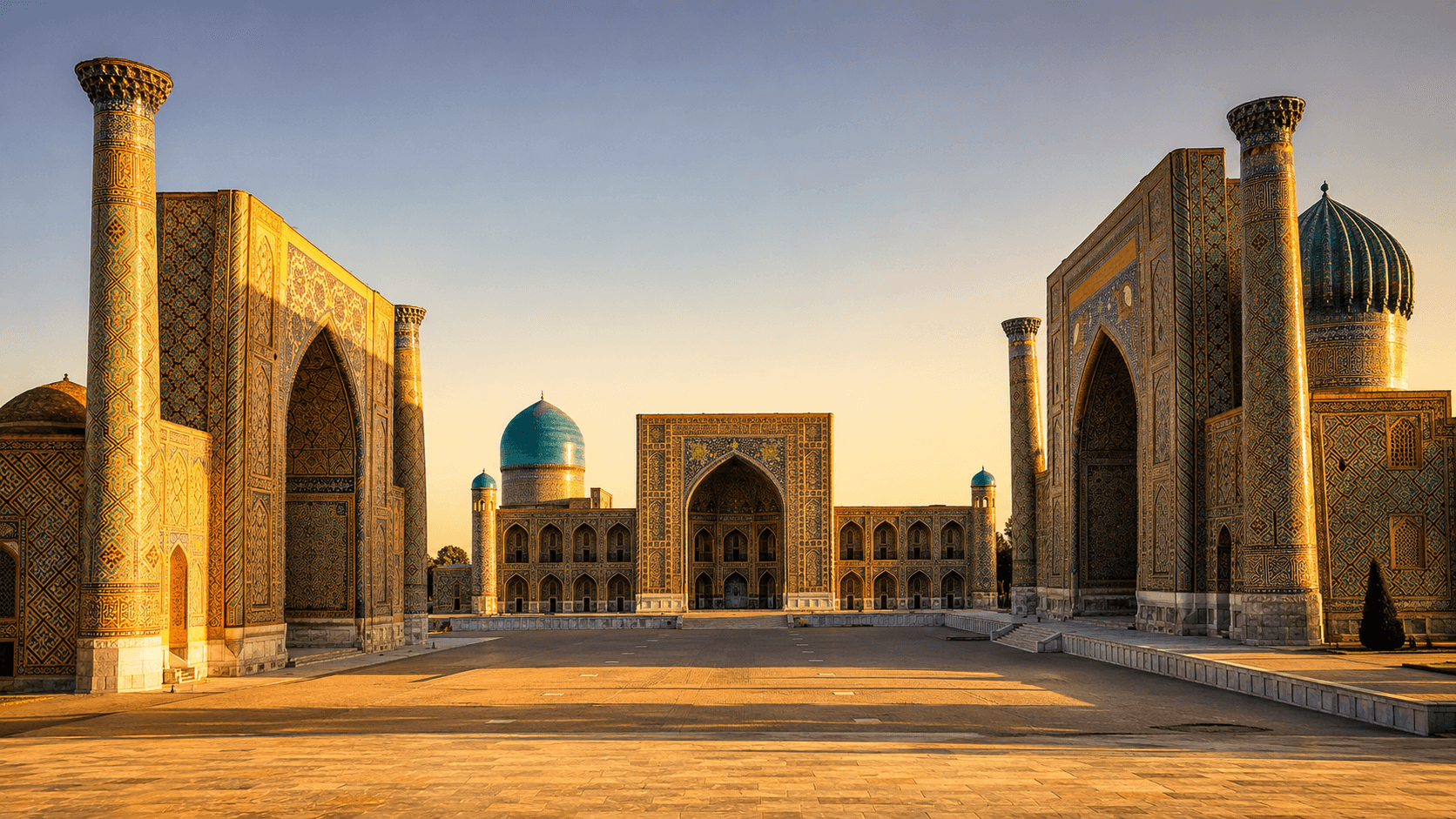
MBBS Abroad
Uzbekistan
FAQs - MBBS in Kazakhstan 2027
Honest answers to the questions Indian students and parents ask most before applying to Kazakhstan.
No Kazakh university on this roster publishes a course total, so we will not print one - every "total cost of MBBS in Kazakhstan" figure you find online is somebody's arithmetic, not a university's price. What the universities do publish, each in its own currency: Astana Medical University 3,000,000 KZT a year for English-medium Medicine (2026-27), South Kazakhstan Medical Academy 1,708,000 KZT a year (2025-26), Karaganda USD 4,675 for year one (2026-27), and Semey USD 4,100 a year as the university's own estimate, with no academic year stated. Karaganda's price list prints seven descending course-year rates, but those are seven cohorts' current rates rather than one student's schedule - tracking intakes across three years of its price lists shows each cohort is held near the rate it entered on. Hostel is extra: Astana, Karaganda and South Kazakhstan publish hostel rates in tenge, Semey prints only an estimate, and none of them publishes living costs. Ask us for a written quote from the university before you plan around any number.
Yes. NEET is mandatory for any Indian student who wants to study MBBS in Kazakhstan and practise in India. On English: Kazakhstan's national admission rules require foreign students entering English-medium Healthcare programmes to hold one of five certificates - IELTS Academic 5.0, TOEFL iBT 35, TOEFL ITP 417, TOEIC 550 or Duolingo English Test 80 - and to pass an interview. In practice the universities differ: Astana and Al-Farabi publish that rule, while Karaganda, Semey and South Kazakhstan publish their own entrance tests or English interviews. Confirm your university's current route before booking a test.
Yes, conditionally. NMC approves no foreign university; what counts is whether your degree meets NMC's FMGL-2021 criteria: at least 54 months of study, a degree with English as its medium of instruction, a 12-month internship at the same Kazakh university, and a qualification that licenses you to practise medicine in Kazakhstan. After graduating you must pass the FMGE (the route until NExT comes into force; no NExT date has been notified), then complete a 12-month supervised internship in India. Confirm each condition in writing for your university: KazNMU's 2026-27 admission order for foreign citizens names Kazakh or Russian as the language of instruction, with no English-medium intake published, and the Embassy of India in Astana warned on 1 October 2026 that it has no official confirmation that the new six-year accelerated track leads to a licence to practise. A.J Trust only facilitates admissions to WDOMS-listed universities.
Sometimes - and the number you may have seen is wrong. Kazakhstan's Model Admission Rules (MES order No. 600, paragraph 7, restated July 2025) require foreign students entering English-medium Healthcare programmes to hold one of five certificates, and the IELTS floor is Academic 5.0, not 5.5-6.5: IELTS Academic 5.0, TOEFL iBT 35, TOEFL ITP 417, TOEIC 550 or Duolingo English Test 80. IELTS is not privileged - Duolingo 80 satisfies the same rule. And not every university asks for a certificate: Astana and Al-Farabi publish the requirement, while Karaganda runs its own test in maths, chemistry, biology and English grammar plus an interview in English, Semey admits on an English interview, and South Kazakhstan runs a five-subject entrance test. A.J Trust confirms the route your university is actually running for your intake.
On FMGE performance, Astana Medical University leads the universities we track - 149 of 416 passed in 2024 (35.82%), and 448 of 1,476 lifetime (30.35%). Karaganda has by far the largest Indian cohort we track, but 1,405 of its 8,129 candidates have passed (17.28% lifetime), and Semey (819 of 4,056, 20.19%) and South Kazakhstan (357 of 1,727, 20.67%) sit around 20% across all NBEMS reports. KazNMU, a name many agents lead with, has the weakest record of the five - 180 of 1,311 lifetime (13.73%) - and publishes no English-medium admission order for foreign citizens. For a warmer city, South Kazakhstan Medical Academy in Shymkent. A.J Trust matches you to the right university for free.
Payments from India for education abroad fall under RBI's Liberalised Remittance Scheme and go through your bank as an international transfer. Astana and South Kazakhstan price in tenge and Karaganda in US dollars; Semey prints a US-dollar estimate but also keeps a signed tenge tariff, so confirm the billing currency on your invoice - then ask your bank which currency it will send and what it charges. Pay only to the account the university itself names on its admission letter or invoice, never to an individual. A.J Trust provides exact payment instructions (bank details, currency, transfer format) for each university before you transfer any funds.
It varies a lot by university, so treat the country figure as context and the university as the decision - four of the five universities we track were below the country figure in 2024. From the NBEMS institute-wise reports: Astana Medical University 149 of 416 in 2024 (35.82%), Karaganda 277 of 1,142 (24.26%), South Kazakhstan 134 of 538 (24.91%), Semey 164 of 751 (21.84%), and Kazakh National Medical University 10 of 65 (15.38%). Kazakhstan as a whole passed 1,261 of 5,018 in 2024 - 25.13%, just under the all-country figure of 20,382 of 79,000 (25.80%).
Kazakhstan ranks 44th of 163 on the Global Peace Index 2026, against Russia's 163rd and Georgia's 94th. The index measures country-level conflict, safety and militarisation rather than campus life, so treat it as context. There is no ongoing armed conflict in Kazakhstan. The Indian student community, about 10,000 by the Ministry of External Affairs' July 2026 count, means Indian students are a familiar presence. The Embassy of India in Astana publishes guidance for Indian students on choosing a university, accommodation and medical insurance, and on 1 October 2026 an advisory on course length; read them before you enrol.
Cold, especially in the north. Astana, the capital, has long and severe winters; Almaty is milder, and Shymkent in the south is the warmest city on our roster. Summers are hot and dry. Budget for heavy winter clothing in Year 1 - students from South India usually find the adjustment hardest, while students from North India, who already know cold winters, adapt more easily.
It is changing. On 1 October 2026 the Embassy of India in Astana advised that under a new Kazakh policy the standard medical course is seven years, that international students may finish in six through an accelerated track subject to conditions, and that the Embassy has no official confirmation yet that the six-year track leads to a licence to practise; it has asked Kazakhstan's Ministry of Science and Higher Education and is awaiting a reply. Plan for the possibility of seven years. For India, FMGL-2021 needs at least 54 months of study in English plus a 12-month internship at the same university, and the internship does not count toward the 54 months. Check the track you are joining: Astana's WDOMS record also lists a 5-year bachelor track with no clinical training, and WDOMS calls South Kazakhstan's internship year optional. Get the study and internship split, and the licence it leads to, written on your admission letter.
Still have questions?
Our senior counsellors are here to help - honest, personalised guidance with a reply within minutes and zero pressure.

Ready to Start Your MBBS in Kazakhstan?
Book a free session with our counsellors. We'll match you to the right WDOMS-listed university in Kazakhstan based on your NEET score and IELTS level - no pressure, no hidden fees.